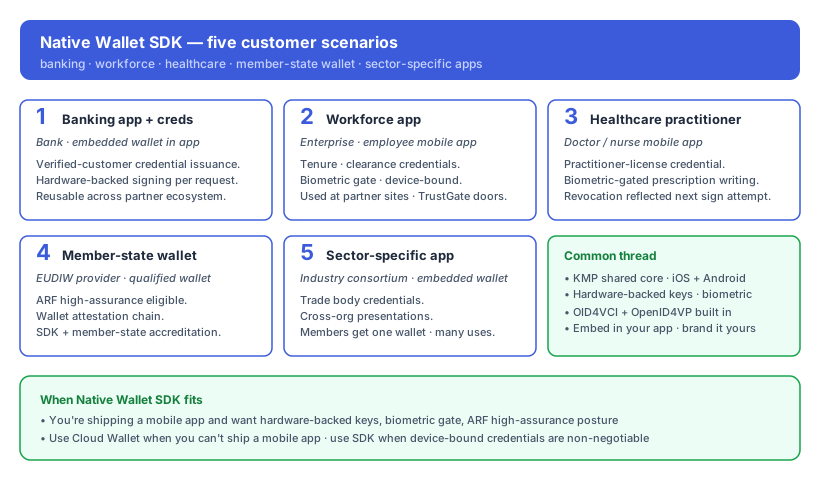
Five embedded-wallet scenarios — plus 'when to use which' against Cloud Wallet.
Five embedded-wallet scenarios. Plus "when to use which" with Cloud Wallet — phone-held + hardware-backed = SDK; browser + easy integration = Cloud Wallet.
The five named scenarios with archetype and outcome — pick the closest fit when shipping a mobile app with hardware-backed credentials.
1
Banking app with credentials
Customer: A retail bank with a mobile app.
Outcome: Customer holds their verified-customer credential + PID inside the banking app. Presentations trigger FaceID / TouchID / BiometricPrompt. Brand and UX stay consistent — no 'open wallet X, switch back' friction.
2
Workforce app
Customer: An enterprise with a company mobile app.
Outcome: Employee's phone holds employment + training completion + site-access credentials. Reception scans; the app presents selectively (only the specific credential the reception requests).
3
Healthcare practitioner app
Customer: A clinical software vendor embedding verifiable licensing.
Outcome: Practitioner holds their professional credentials in the clinic's app. Biometric gate on every controlled-substance prescription. Licence revocation propagates via Broker's status-list check.
4
Member-state wallet
Customer: A national identity authority building an EUDIW-conformant wallet app.
Outcome: National wallet built on the SDK. ARF high-assurance eligibility out of the box (Secure Enclave / StrongBox). Branded and distributed per member state; shared protocol core.
5
Sector-specific app
Customer: A logistics / industrial / aviation platform with custom workforce credentials.
Outcome: Credentials live in the industry app. Custom deep-link handlers, offline presentation modes, and sector-specific display metadata resolve via VCT Registry.