eIDAS 2.0
Integrations
How eIDAS Verifier composes — plus a decision guide for when to use it vs. the general-purpose Broker.
eIDAS Verifier is a specialised Broker with ARF-specific defaults. Here's how it composes with the rest of the catalog — and when to pick it over Broker.
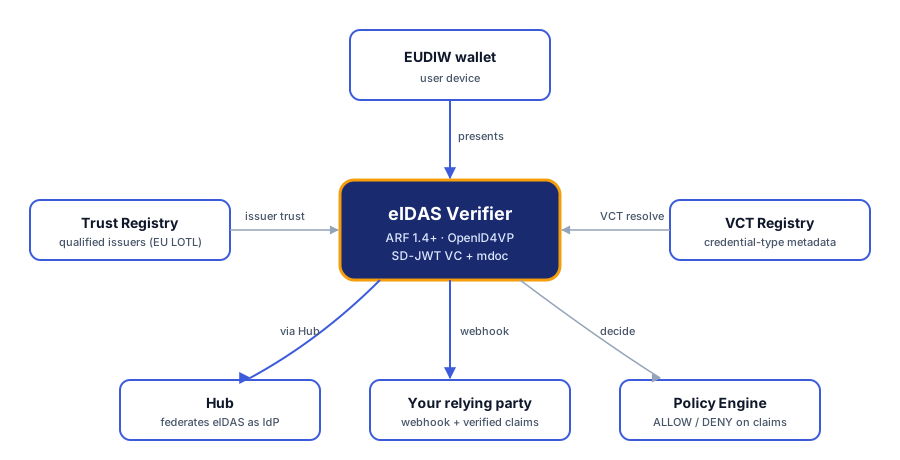
Thoryn catalog composition
eIDAS Verifier + Broker
Pattern: eIDAS Verifier shares the verification engine with Broker. It ships with ARF-specific defaults (qualified-issuer enforcement, EUDIW-conformant presentation definitions). Use the Verifier for EUDIW-specifically; Broker for general credential verification.
eIDAS Verifier + Trust Registry
Pattern: Verifier reads the EU Trusted Lists via Trust Registry. Only qualified issuers pass; private-sector issuers are rejected by default unless the operator configures otherwise.
eIDAS Verifier + VCT Registry
Pattern: Credential-type metadata for qualified attestations resolves via VCT Registry. Display info, claim schema, validation rules — all served from the registry.
eIDAS Verifier + Hub
Pattern: For service providers using Hub as their OAuth2 layer, Hub can federate to the eIDAS Verifier as an 'IdP'. Users authenticate via EUDIW wallet; Hub returns a standard OIDC ID token to your app.
eIDAS Verifier + Policy Engine
Pattern: After verification, Policy Engine decides ALLOW / DENY based on verified claims. For regulated flows (qualified-electronic-signature requirements, sector-specific attestations), policy rules encode the acceptance criteria.
Also on eIDAS Verifier
Ready to accept EUDIW presentations?
Request access to connect the eIDAS Verifier to your relying party.