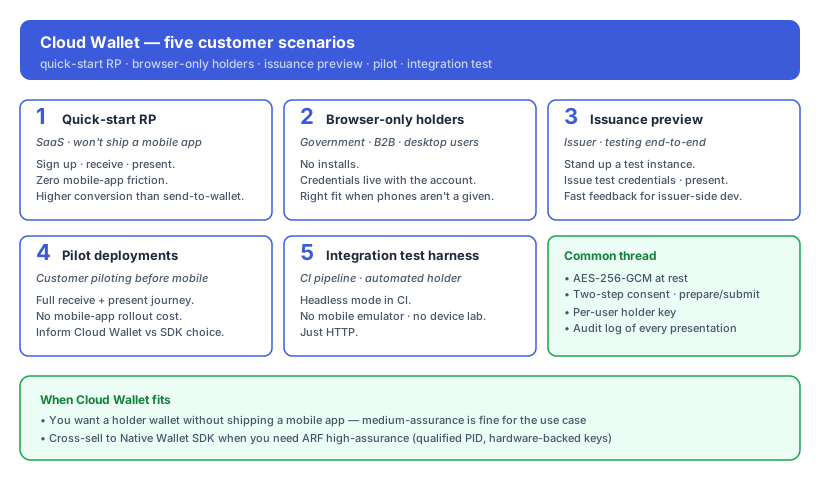
Five scenarios — from quick-start onboarding to integration test harnesses.
Five scenarios where a server-side wallet beats a native mobile wallet — or complements it.
The five named scenarios with archetype and outcome — server-side wallet wins where mobile-app friction is too high.
1
Quick-start relying party
Customer: A SaaS vendor wanting to accept verifiable credentials but unwilling to ship a mobile app to users.
Outcome: Users sign up on your site, receive credentials from partners into Cloud Wallet, present them to verifiers. Zero mobile-app friction; conversion measurably higher than send-to-wallet flows.
2
Browser-only holders
Customer: A government service or B2B app where the end user works primarily in a browser on a desktop/laptop.
Outcome: Cloud Wallet is the right fit. Users don't need to install anything; credentials live with their account.
3
Issuance preview
Customer: An issuer wanting to test credential issuance end-to-end without requiring a mobile wallet app.
Outcome: Stand up a test Cloud Wallet instance; issue test credentials; present to a verifier. Fast feedback loop for issuer-side dev.
4
Pilot deployments
Customer: A customer piloting verifiable credentials before committing to mobile-wallet distribution.
Outcome: Cloud Wallet shows the full receive + present user journey without the mobile-app rollout cost. Results inform the production decision (Cloud Wallet or Native Wallet SDK).
5
Integration test harness
Customer: A CI pipeline testing verifiable-credential flows against Broker / Credential Issuer / VCT Registry.
Outcome: Cloud Wallet in headless mode acts as a holder in automated tests. No mobile emulator, no device lab — just HTTP.