Identity, programmable
How it works
Session lifecycle, trust-chain validation, and webhook delivery — the protocol-level story of a presentation.
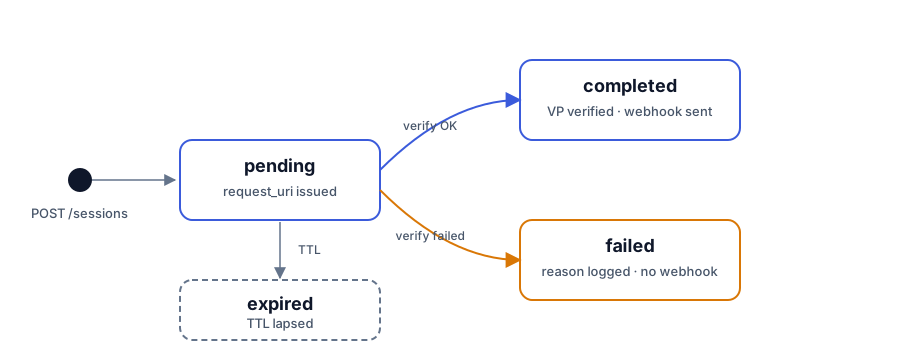
Session lifecycle
A verification flow is a session. Your app creates one, the wallet presents against it, Broker verifies, and your webhook receives the result. Sessions move through three states with a configurable TTL.
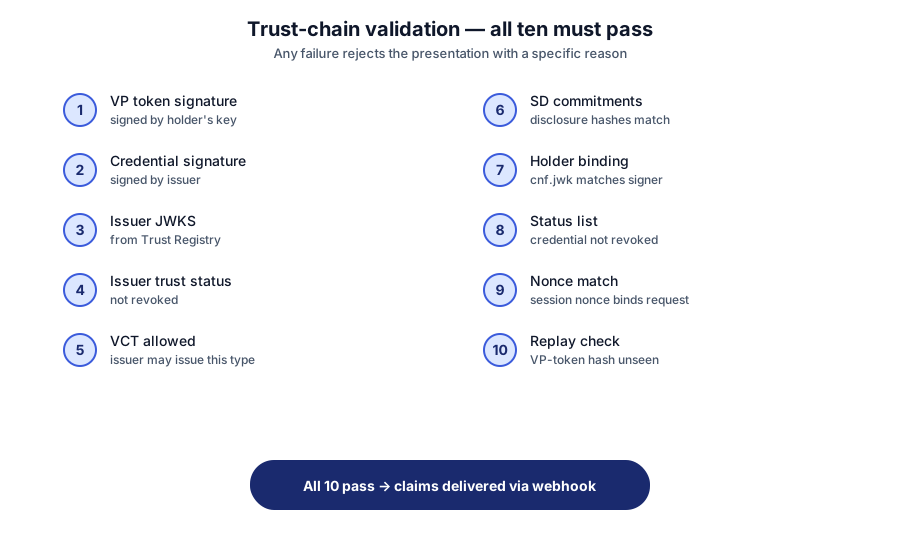
Trust-chain validation — all ten checks
Every presentation passes ten independent checks. Any one failure rejects the VP token with a logged reason, so audit reviews reproduce the decision exactly. No check is optional; no check can be bypassed by configuration.
Wallet profile + presentation definition
Two concepts separate which wallets you accept from what you're asking for.
- Wallet profile
- Accepted formats (
vc+sd-jwt,mso_mdoc), the Trust Registry to consult, and optional Policy Engine wiring. - Presentation definition
- W3C Presentation Exchange 2.0 — the credential type, required claims, and selective-disclosure constraints. The wallet matches available credentials and prompts the user to consent.
Replay prevention
Two layers: a per-session nonce that binds the wallet's signed authorization request, and a 24-hour VP-token hash cache in Redis. Cross-session replay and within-session resubmission both fail.
Claim extraction + webhook delivery
After verification, Broker POSTs a normalised claims object to your callback URL with an HMAC-SHA256 signature and an idempotency key. Retries use exponential backoff over 30 minutes. A signed-JWT variant is available when your webhook receiver prefers verifying without a pre-shared secret. Undisclosed claim paths are literally absent, not nulled.
Also on Broker
Ready to verify credentials?
Request access to run the demos and wire Broker into your app.